

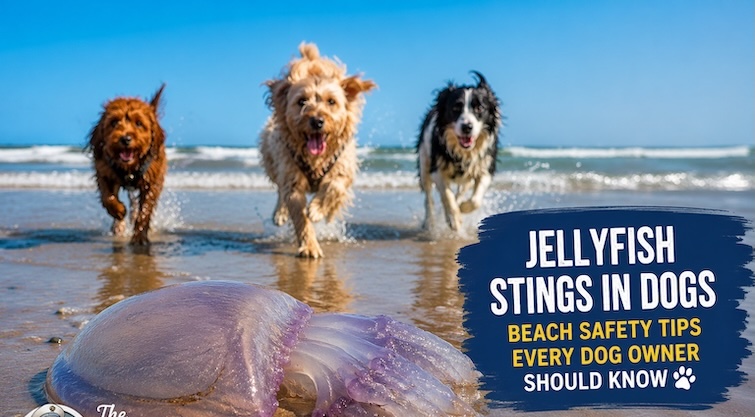
Woof. I’m Ziggy Bear, and I need to tell you about a beach day that looked fun at first… but turned into something my human took very seriously.
We went to the seaside for a swim. I love water. I mean, LOVE it. The second I hear waves, I turn into a four-legged torpedo. But this time, something was different. Floating in the shallows were lots of strange, wobbly blobs—jellyfish.
At first, I thought they were harmless sea toys. But my human stopped me before I got too close, and that’s when I learned something important: jellyfish can be dangerous for dogs.
Jellyfish sting using tiny venom-filled cells in their tentacles. Even when they’re washed up or look “dead,” those stingers can still activate. For dogs like me, who love sniffing and splashing, that’s a real risk—especially around paws, nose, mouth or belly where skin is sensitive.
My human explained that if a dog gets stung, it can cause immediate pain, redness, swelling, and intense licking or pawing at the area. Some dogs can also have more serious reactions like vomiting, weakness, or breathing problems, especially if stung multiple times or if the sting is near the face or mouth.
We didn’t take chances. My human kept me on a lead in shallow water and away from anything drifting in the tide.
If you are stung by a jellyfish, it’s important to act quickly. Get your human to carefully remove any remaining tentacles using a stick, towel, or another object to avoid touching them with their bare hands, and never rub the affected area, as this can release more venom. Rinse the sting with seawater rather than fresh water, as fresh water may trigger more stinging cells to fire. Contact your vet as soon as possible for advice. Symptoms appear anywhere from a few minutes to up to three hours after the sting.
We still had a good beach day, just a smarter one. I still had a good sniff around and shook sand everywhere (important dog duty). But I also learned that the ocean has rules, and some of its creatures are best admired from a safe distance.
So from me, Ziggy Bear: enjoy the sea, but respect the jellyfish. They don’t want to play fetch.
Woofs Ziggy Bear
Now that you’ve learned how to keep your four-legged friend safe around jellyfish, why not plan your next seaside adventure with confidence? Sniff out The Barking Bugle’s Doggy Tourist Guide to Norfolk for the best dog-friendly beaches, coastal walks, and places where pups are always welcome. And don’t forget to head back to our home page for more tail-wagging adventures, practical safety tips, and dog-friendly days out across Norfolk!
🐾 Join the Barking Bugle Pack! 🐶
Follow our daily adventures on social media, and don’t forget to woof about us to your friends!


